

Welcome
Meet Hud
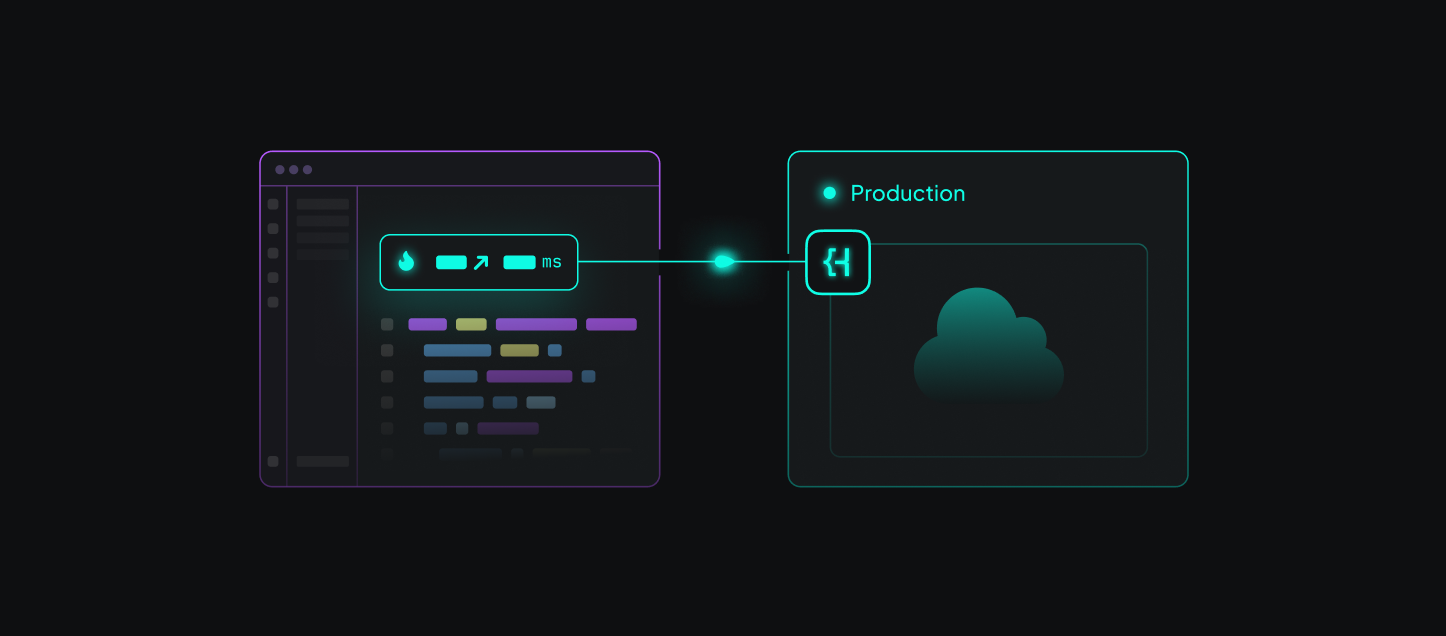
Coding agents write a change in minutes. Getting it to production still runs on people. They review the PR, watch the rollout and dig through logs when something breaks, because the agent has never seen the code run. Hud brings runtime context to every change, so low-risk changes take the fast track, the rest are reviewed faster, and production stays reliable.
Hud reads production from its own Sensor, from the observability stack you already run, or from both. Hud's Sensor runs inside each backend service and learns each function's baseline. For each function, it knows:
- How often it runs and how long it takes, for each endpoint, queue and caller.
- What calls it and what it calls, including databases and other services.
- Which exceptions it throws, even the ones your code catches.
- How all of that changed with the latest deployment.
When something goes wrong, the Sensor has already captured the request, the call graph and the exception with its stack trace.
The same runtime context goes wherever your code changes:
- Before the merge, in the Merge Gateway: low-risk PRs take the fast track, where someone can approve them in one click, and the rest reach a reviewer with the reason.
- As the new version takes traffic, in Agentic Rollout: every function is checked against its baseline, with no metrics to pick or thresholds to write.
- When a change regresses, as the evidence your coding agent needs to fix it. The fix comes back as a PR, through the same gate.
Agentic Rollout and the evidence for a fix both need Hud's Sensor. On your observability stack alone, Hud checks PRs before the merge.
Hud works with whichever coding agent your team uses, like Claude Code, Cursor or Codex.
Updated 4 minutes ago